

When the sky over North Texas takes on an ominous greenish hue and sirens in Dallas pierce the air, most people seek safety in shelters. However, there are those who, at that very moment, hit the gas, directing their armored vehicles straight toward the destructive elements. Storm chasing in Texas has long ceased to be merely a search for adrenaline. Today, it is a high-tech war for every minute of warning, where mobile radars, Starlink satellites, and the steely resolve of crews become the metropolis’s only shield against unpredictable atmospheric monsters.
On dallas1.one, we explore:
- Why North Texas specifically became the ideal testing ground for the formation of supercells and the birth of the “storm chasers” profession;
- An overview of the technological arsenal—from roof-mounted Doppler radars to digital armor that withstands strikes from giant hail;
- How private research groups interact with the National Weather Service in Fort Worth to respond to approaching danger;
- An analysis of real tornado interception cases in Dallas and the role of video evidence in improving architectural safety standards;
- The problems of “storm tourism,” traffic collapses on highways, and the ethical dilemmas of chasing content.
The Birth of an Extreme Craft in North Texas
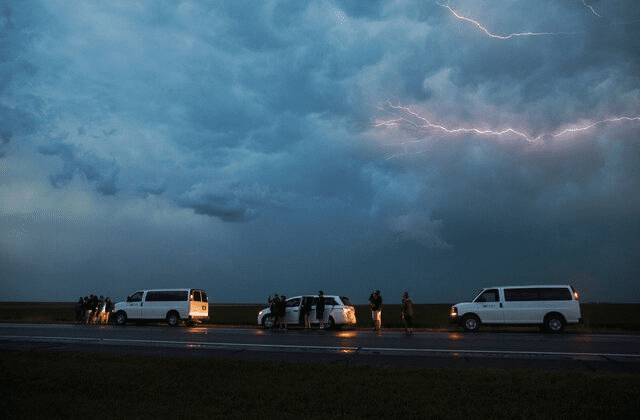
When spring arrives in North Texas, it brings more than just blooms; it turns Dallas and surrounding counties into the epicenter of atmospheric anomalies. It is here, on the southern edge of the notorious “Tornado Alley,” that one of the world’s most dangerous professions was born—storm chasing. This is a unique subculture where science meets pure adrenaline, and Texas highways become the front line in the war for knowledge about the elements.
The Phenomenon of the Texas “Tornado Alley”
The geographical location of Dallas makes it an ideal testing ground for observing supercells—ultra-powerful thunderstorm clouds. The specific collision of dry desert air from the west and moist masses from the Gulf of Mexico creates perfect conditions for the formation of destructive vortices.
These daredevils, known in the U.S. as “storm chasers,” deliberately head toward the very places most ordinary citizens are trying to flee as quickly as possible. Their activity has long since moved beyond simple curiosity, evolving into a complex system of sky monitoring where every trip into the field is a meticulously planned operation.
From Scientific Initiative to Extreme Profession
The history of tornado study in the region began as a purely scientific initiative designed to unravel the root causes of atmospheric monsters. However, over time, closed indoor research moved directly into the “heart of the storm.”
- Degree-holding Scientists: Use mobile Doppler radars and sensors to record pressure and wind speed inside the funnel.
- Independent Experts: Provide media and weather services with unique visual data in real time.
- Seasoned Extremists: Assist in field observations, often being the first to arrive at locations where the elements have just demonstrated their power.
Modern Patrolling of Texas Highways
Today, this craft unites hundreds of professionals who patrol the key highways of North Texas every spring. Their vehicles, equipped with satellite communications and armored glass, resemble futuristic laboratories on wheels. This is not just a chase for footage—it is daily labor aimed at improving early warning systems, which save thousands of lives annually in the Dallas–Fort Worth Metroplex.
For these people, a tornado is not just a natural disaster but a perfect and simultaneously terrifying mechanism, the study of which requires steely endurance and deep respect for the power of nature. Texas became the cradle of this extreme profession, where every season brings new discoveries and tempers the characters of those who chose the path of researching uncontrollable elements.
The Technological Arsenal of Modern Meteorologists
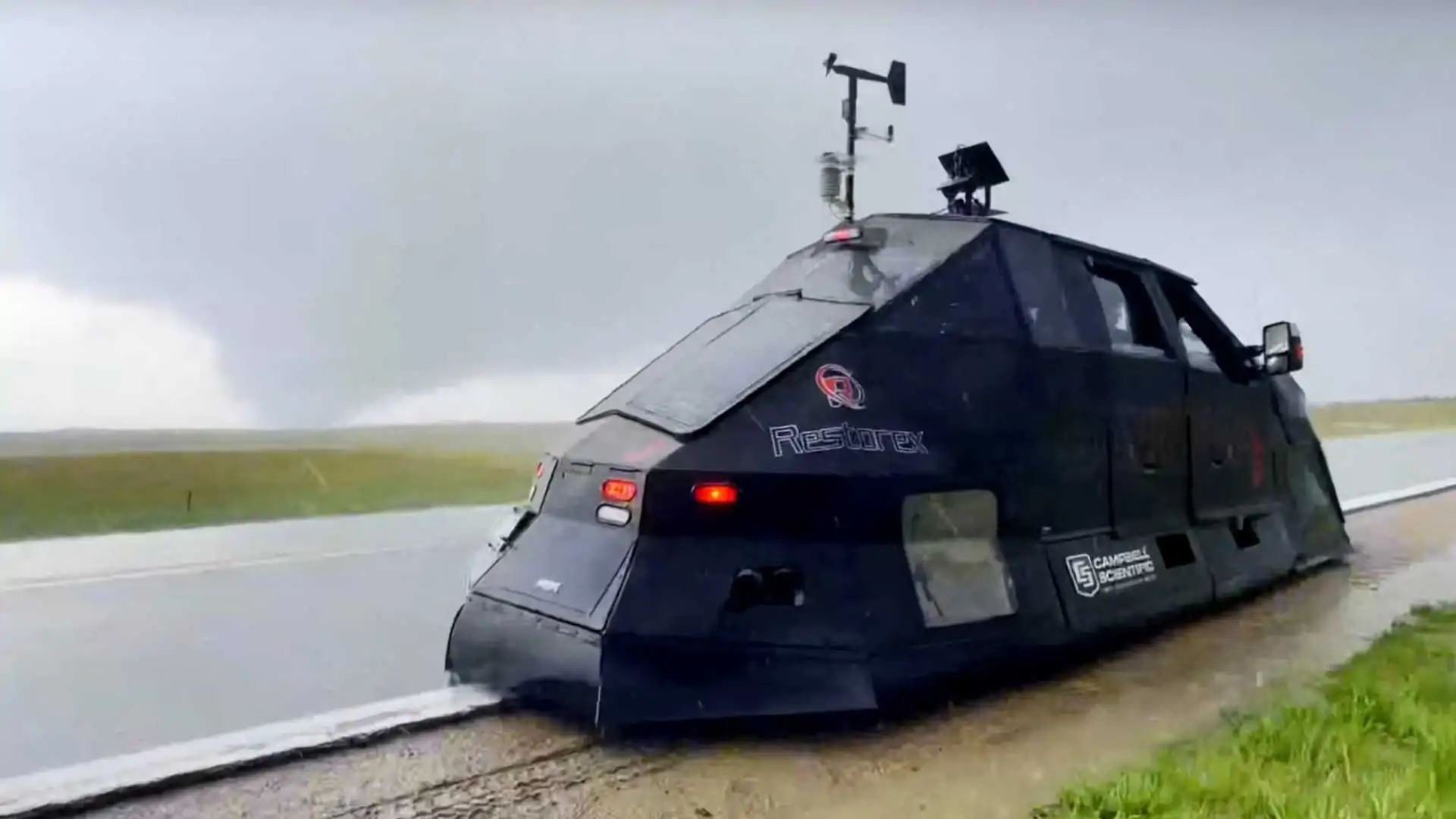
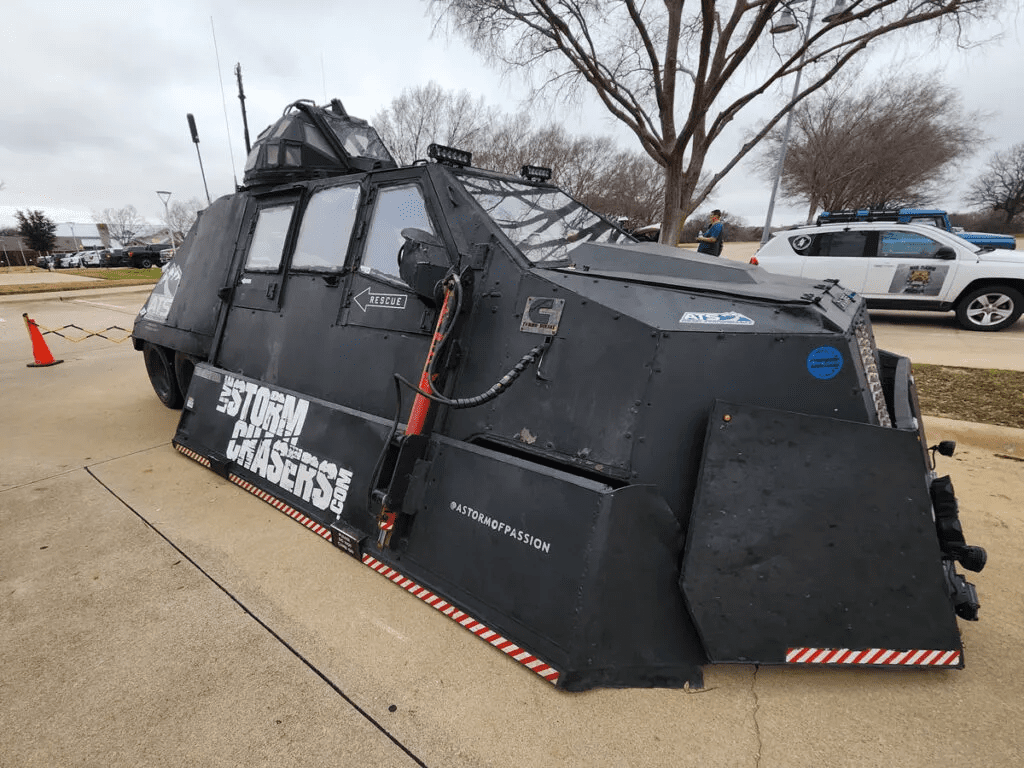
The days when desperate daredevils relied solely on a mechanical barometer, their intuition, and visual signs of an approaching storm are gone forever. Today, “tornado hunting” in North Texas has turned into a high-tech operation where the price of an error is a human life. A current mobile weather center is no longer just a car but a true armored tank, packed to the brim with high-precision electronics and life-support systems.
To protect against the giant hail that often accompanies ultra-powerful thunderstorm clouds, SUV bodies are meticulously encased in thick steel sheets. Vulnerable windows are securely covered with ultra-strong polycarbonate, capable of withstanding a direct hit from an ice block the size of a grapefruit at high speeds.
Local Radars and the Crews’ Digital Armor
The key factor for success is not only physical strength but also the team’s ability to see what is hidden inside the atmospheric chaos. The technological equipment of modern groups is impressive:
- Portable Doppler Units. Unique scanners mounted on vehicle roofs are capable of piercing a storm cloud with radio signals even during high-speed movement. This allows the team to see the three-dimensional structure of the storm in real time.
- High-Precision Anemometers. Sensors that record the intensity and direction of the wind inside the dark vortex with a tiny margin of error of up to one meter per second, providing scientists with invaluable data for modeling the elements.
- Starlink Satellite Terminals. Guarantee the uninterrupted receipt of fresh images from orbit and data exchange with national weather services. This is critical when ground-based cell towers have already been knocked down by powerful wind gusts.
- Pressure and Humidity Sensors. Special probes that storm chasers attempt to deploy directly in the path of a tornado’s movement to record the anomalous pressure drop at its center.
The use of such an arsenal transforms a dangerous pursuit into the collection of fundamental scientific data. Thanks to mobile radars, specialists can identify the moment of a tornado’s birth inside an ultra-powerful rotating cloud even before the funnel touches the ground. This gives residents of surrounding towns an additional 10–15 minutes, which often proves decisive for evacuation to shelters.
Each crew works as a single, coordinated organism, where the driver, navigator, and radar operator process massive amounts of information every second. This approach makes modern storm research in Dallas not only a profession for the few but also a vital part of the national civil safety system. Technology allows humanity not just to observe the wrath of nature but to understand its language, minimizing the destructive consequences of each subsequent season.
Interception Algorithm and Government Interaction
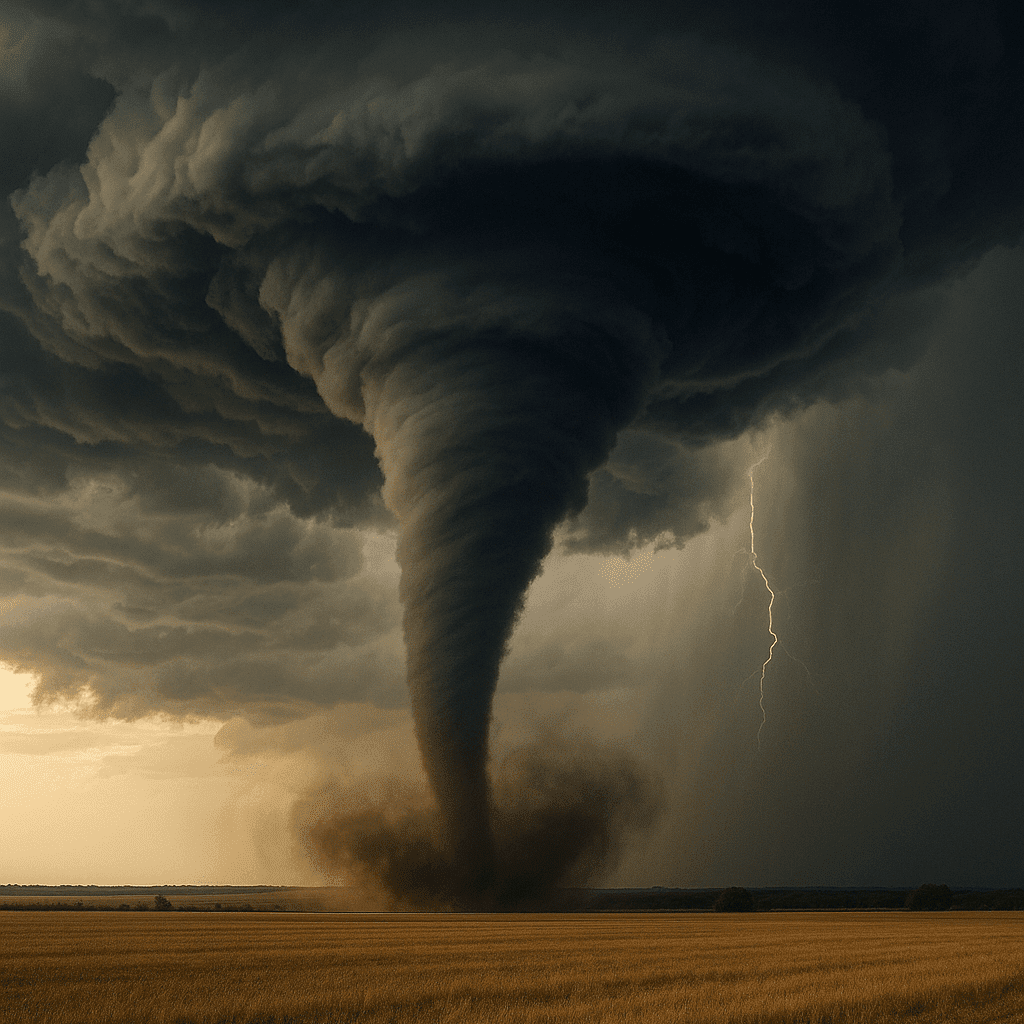
Every risky trip into the field is not a chaotic chase for adrenaline but an operation requiring meticulous, purely mathematical planning. Practicing meteorologists in Dallas begin their morning not with coffee, but with a profound analysis of thermodynamic indicators. They study the current dew point (the moisture indicator that feeds the storm), record sudden shifts in air masses at different altitudes, and assess the overall level of tropospheric instability. When a threatening, ultra-powerful rotating cloud appears on the monitors, teams take up strategic positions near its probable trajectory in advance, preparing for “interception.”
The effectiveness of such work is based on clearly defined interaction protocols between private groups and government structures:
- Instant Transmission of Visual Confirmations. Operational reports of a developing cataclysm, known as “ground truth,” are immediately sent to the National Weather Service in Fort Worth. Since radars can sometimes be mistaken due to signal distortion by terrain, the “eyes” of chasers on the ground are the most reliable source of information.
- Synchronization with the SKYWARN Network. Collected information is instantly distributed through a local network of volunteer spotters. This serves as a signal for the immediate activation of city sirens, giving people a chance to find shelter before the sky turns black.
- Scientific Documentation of the Epicenter. Accurate measurement of sharp pressure and humidity jumps directly near the storm’s epicenter provides unique figures for future computer modeling, helping to more accurately predict storms in the years to come.
The established symbiosis of government agencies and private crews saves hundreds of lives in the vast Dallas–Fort Worth metropolitan area every year. Thanks to this invisible but lightning-fast communication, Texas has become a world leader in rapid response to natural threats. The success of each mission is measured not by the number of spectacular photos, but by the number of timely warned people for whom the professionalism of extreme meteorologists became the main shield against enraged nature.
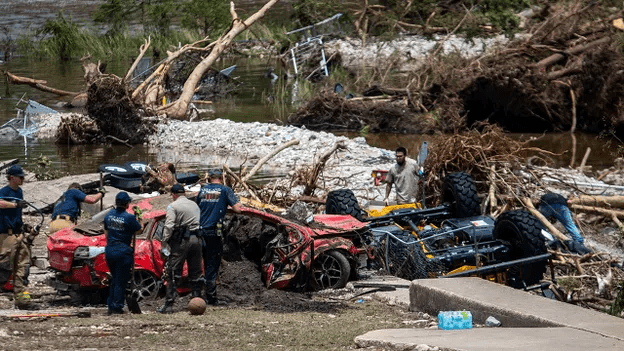
The Anatomy of Destruction
Documenting tragic consequences is a critical part of the overall mission. Collected unique photographic materials constantly help architectural engineers improve strict standards for constructing safer residential neighborhoods.
Irrefutable proof of the significance of such hard work was the powerful EF-3 category storm that unexpectedly hit the densely populated northern districts of the metropolis in late autumn 2019. At that time, experienced pursuers were among the first to release evidence that the killer cloud was insidiously hiding behind an extremely dense curtain of continuous downpour. The critical information obtained allowed dispatchers to raise the general threat status in time. Thanks to this, massive casualties were completely avoided, despite colossal financial losses to municipal infrastructure.
Ethical Dilemmas and “Storm” Tourism
Recently, the specific atmospheric research industry in North Texas has faced a complex problem of critical highway oversaturation. The total popularization of adrenaline-fueled content through entertainment television shows and social media has provoked the emergence of so-called “storm tours.” Enterprising, and often illegal, guides offer gullible tourists the chance to pay a hefty sum for the phantom opportunity to take a selfie against a black horizon. Such commercialization of the elements generates dangerous traffic gridlock. Hundreds of inexperienced amateur drivers completely block narrow rural junctions, fatally obstructing the passage of rescue equipment, ambulances, and fire crews.
True veteran scientists, who have studied ultra-powerful rotating clouds for decades, categorically condemn such a lighthearted approach. An investigator’s professional level consists not of suicidal proximity to the epicenter for the sake of a spectacular shot, but exclusively of the intelligent ability to maintain a safe distance to record objective instrument results. The behavior of “clout chasers” discredits the Dallas scientific community and creates additional risks for the civilian population, turning a natural disaster zone into an unmanageable attraction.
Ultimately, the future of storm study in Texas depends on the balance between human curiosity and strict professional ethics. The search for truth inside an atmospheric vortex must remain the prerogative of specialists whose actions are aimed at saving lives, not at satisfying tourist demand. Only through strict traffic regulation on the roads and fostering respect for the power of nature can it be guaranteed that the researchers’ extreme craft remains an effective tool for safety rather than a cause of new tragedies in the “heart of the storm.”
Sources:
- https://extremetornadotours.com/2020/01/15/why-you-should-chase-with-us/
- https://makezine.com/article/science/storm-chasers-real-twister-tech/
- https://people.com/after-fleeing-a-tornado-12-years-ago-man-becomes-a-professional-storm-chaser-exclusive-11870999
- https://www.nbcnews.com/news/us-news/female-storm-chasers-pursue-passion-as-severe-weather-events-increase-rcna24886