

“What’s up, Doc?” – almost everyone who grew up watching Warner Bros. cartoons knows this phrase. It belongs to the funny and somewhat cheeky rabbit Bugs Bunny, created by the world-famous animator Tex Avery. He played an important role in the history of American animation. Read more at dallas1.one.
Early years
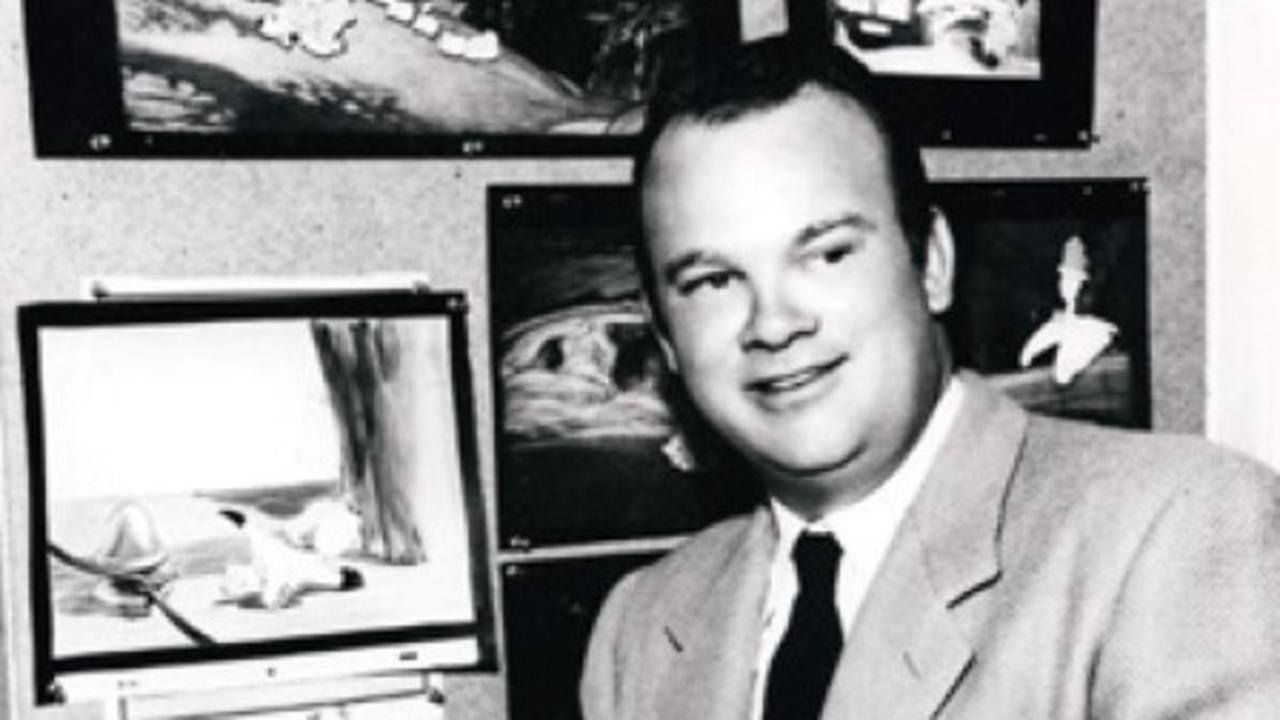
Frederick Bean “Tex” Avery was born in Taylor, Texas, but spent most of his childhood in Dallas. While studying at North Dallas High School, Tex Avery developed a passion for drawing and started creating cartoons for the school newspaper and yearbook.
After graduating from high school in 1926, Tex attended a summer course at the Chicago Art Institute to pursue a career as a professional cartoonist in newspapers. However, he never completed his studies and returned to Dallas in search of part-time jobs.
But Tex’s desire to create illustrations never left him, so he decided to fulfill his dream in California. Coming to Los Angeles in 1929, things did not get better. Radio, which gained popularity among Americans in the 1920s, became a nice alternative to newspapers. Therefore, it was very difficult to find a job in any newspaper.
At the same time, the animation industry was just gaining momentum, and Tex Avery successfully fit in.
Deterioration of vision opened a new imaging
Avery began his animation career at Walter Lantz Studio, Universal Cartoon Studios (later known as Walter Lantz Productions). Here, he worked on the popular series Oswald the Lucky Rabbit. Tex performed a variety of tasks, including drawing backgrounds, creating storyboards and writing scripts and gags (visual jokes based on absurd things). This allowed him to learn the ins and outs of the animation industry. During this time, he was promoted to animator and independently shot two films. According to Tex himself, the works were terrible, yet they were released.
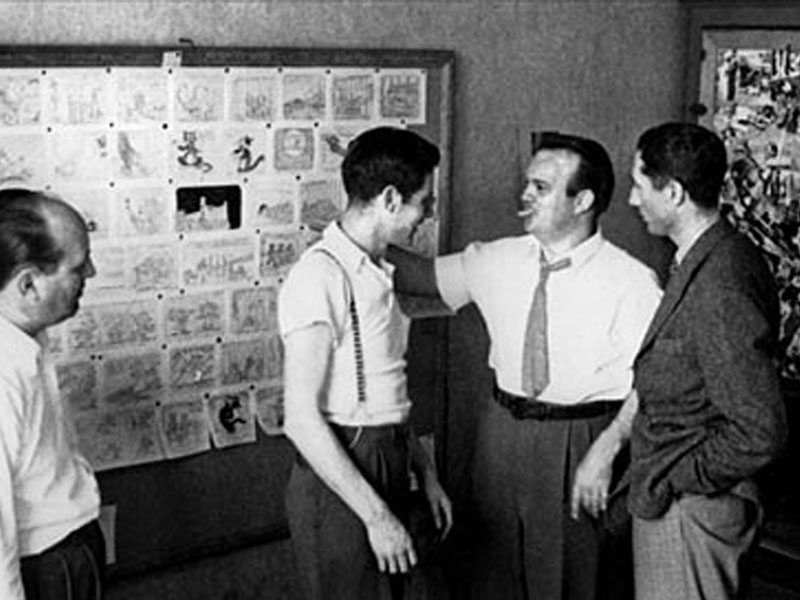
Tex Avery at Walter Lantz Studio
While working at Walter Lantz Studio, an unfortunate accident occurred to Avery. A paper clip flew into his eye, resulting in partial vision loss. Rumor had it that due to the loss of binocular vision, Tex’s perception of the space depth changed, allowing him to develop a unique style in animation.
Work at Warner Bros.
In 1936, Tex Avery joined Warner Bros., where he reached heights in creativity. He was able to convince Leon Schlesinger of his competence as a director and received a team of subordinate animators. Such talents as Chuck Jones, Bob Clampett, Bobe Cannon, Sid Sutherland and Virgil Ross were among them.
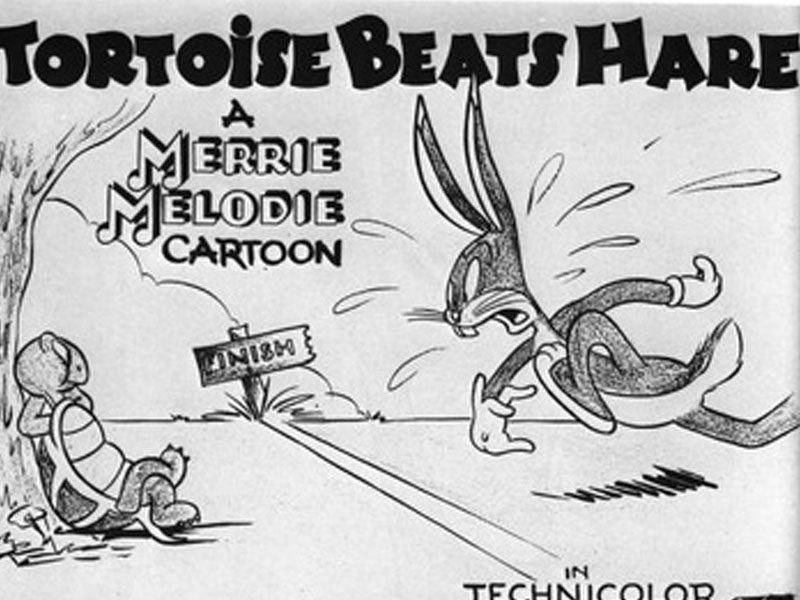
Poster for the cartoon The Tortoise Beats the Hare created by Tex Avery
Avery’s department worked on the black and white franchise Looney Tunes, and their first short film was Gold Diggers of ’49. While at Warner Bros., Tex Avery directed a total of 61 cartoons. He left the studio in 1942 because of a conflict with a producer over the ending of one of the films.
Work at MGM
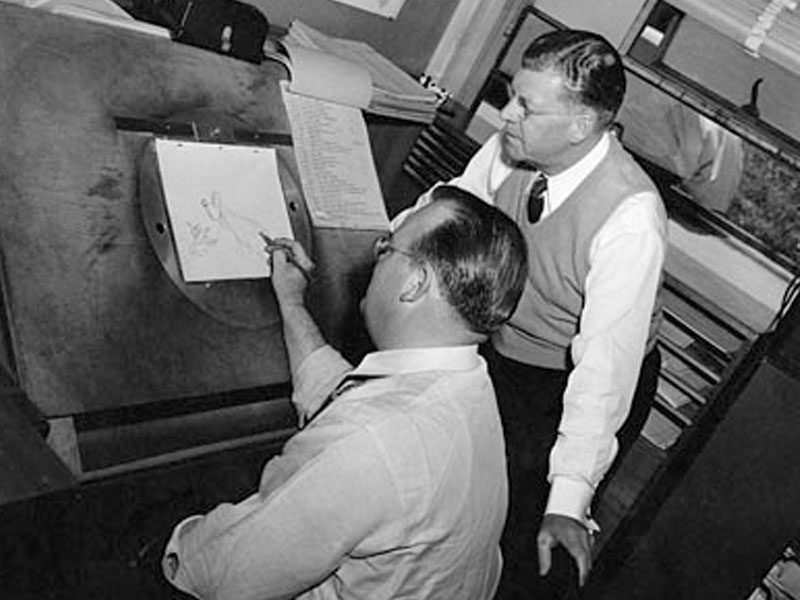
Tex Avery and Fred Quimby at MGM
In 1942, Avery was employed at Metro-Goldwyn-Mayer and became no less successful there. His first short was a parody of Hitler called Blitz Wolf, which was even nominated for an Oscar. Other successful films included Red Hot Riding Hood, Bad Luck Blackie, Cellbound, Magical Maestro, Lucky Ducky, Ventriloquist Cat and King-Size Canary.
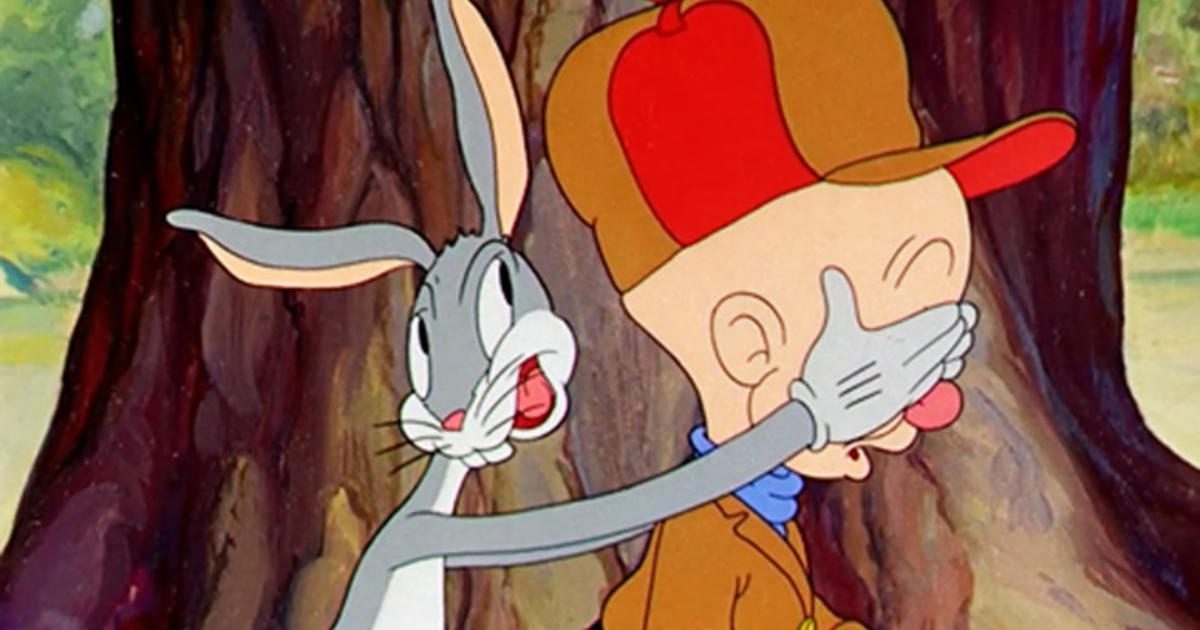
Avery’s creative approach
During that time, the Disney studio dominated the animation market with its powerful technical potential. However, Tex found their cartoons, made in the realism genre, boring. After all, animation provides unlimited space for creativity. Unlike cinema, you can do whatever you want in cartoons.
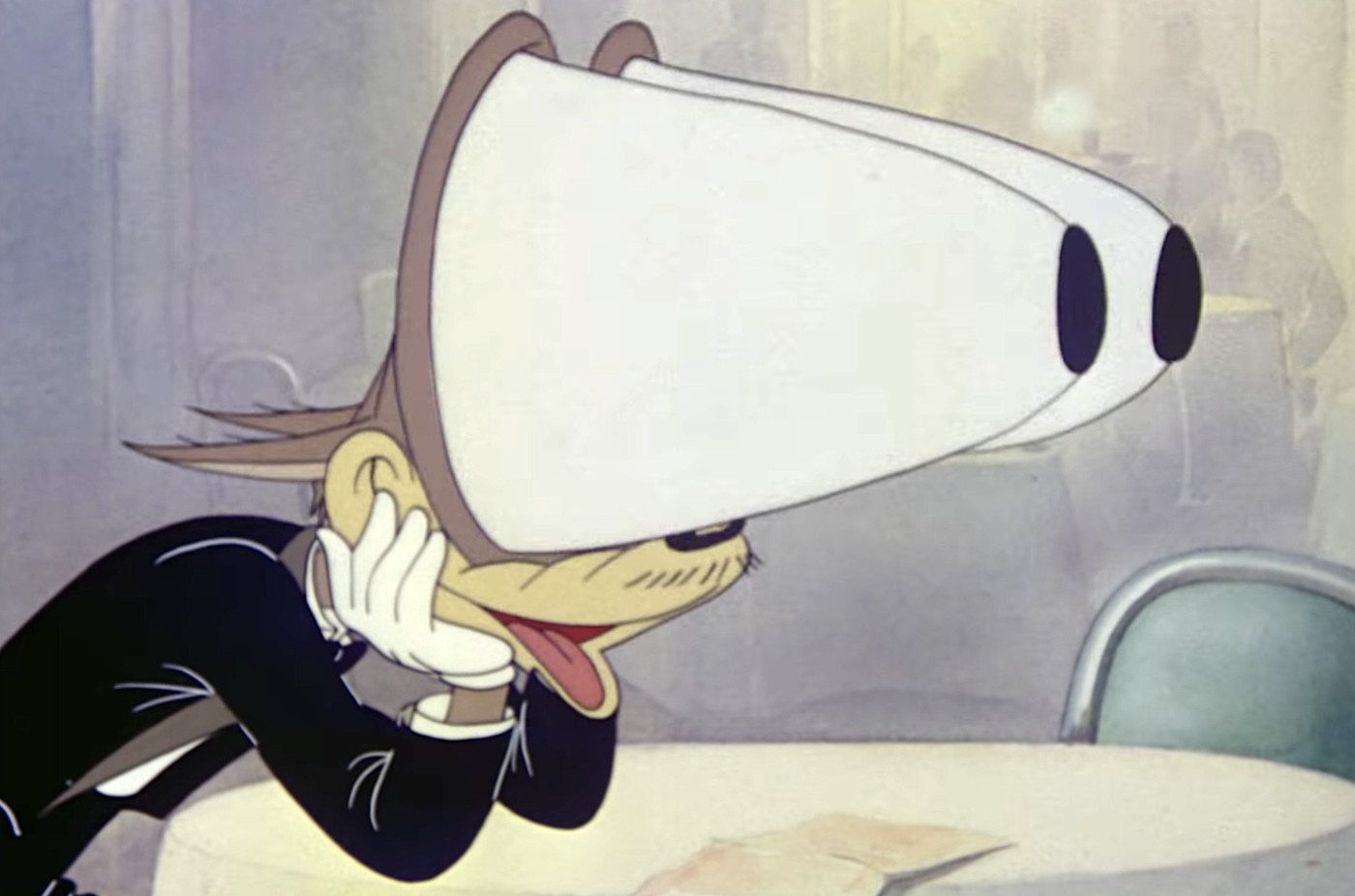
Here are the main comic elements used by Tex Avery:
- Exaggeration. It accentuated the emotions of the characters and the main ideas. Body movements and reactions of Tex’s characters were always intensified, which blurred the line between their inner experiences and external state.
- Dynamic development of events. This element prevented dullness and required fixed focus. Tex Avery could even edit out ready-made scenes from the cartoon just to fit into the timing.
- Gags – comic techniques that defied the laws of physics and logic. Gags were beyond description as they would lose their humor. For example, characters carry water with a sieve or hang in the air when running off a cliff until they look down.
- The unpredictability of the plot. It is hard to predict the next step in Avery’s cartoons. Often, the cartoons were parodies of Disney shorts. The plot construction of Avery’s cartoons is based on the assumption that the audience already knows the storyline. So, the artists radically changed the progression of events, disrupting all expectations and creating a comic effect.
- Jokes. Irony, humor and sarcasm are an integral part of Avery’s work. However, the characters were not the only ones who became the center of jokes. Tex Avery also made fun of artists, directors and viewers, thus breaking the fourth wall.
The new approach to animation won the hearts of both children and adults. He gave the world such cult characters as Bugs Bunny, Daffy Duck, Chilly Willy, Droopy Dog and others, who have remained popular for many decades.