

The era of glass towers, where productivity was measured by hours spent sitting in cubicles, is not just passing—it is transforming into something radically new. Dallas, once considered a bastion of corporate conservatism, has become the primary testing ground for America’s boldest urban and social experiments. Now, business success in North Texas depends not on an office address but on the ability to adapt space to human needs.
As empty skyscrapers turn into luxury apartments and 5G technology blurs the lines between home and the laboratory, we dive into the details of the Texan “digital leap” at dallas1.one.
The Evolution of Downtown Dallas Office Space
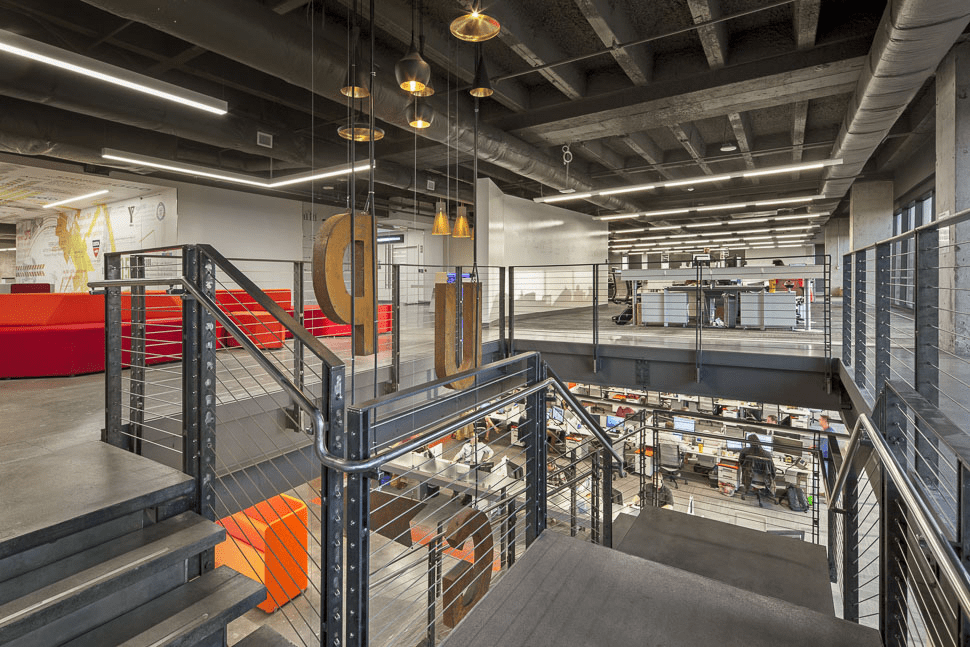
The heart of Dallas, which for decades served as a showcase for traditional corporate conservatism, is currently undergoing its most significant structural metamorphosis since the oil boom. For a long time, an unshakeable dogma prevailed: physical presence at a desk from nine to five was the sole metric of productivity. However, the global pandemic shift acted as a catalyst for change, forcing financial and legal giants to reconsider the necessity of maintaining thousands of empty square feet. Today, we are witnessing the “flight to quality” phenomenon. Businesses are migrating altogether from the gloomy offices of the last century to ultra-modern high-tech hubs.
Currently, approximately 25% of commercial real estate in the city center is vacant, but experts view this not as an end but as the beginning of an era of adaptive reuse. The office has ceased to be a place for “clocking in hours” and has evolved into a strategic tool for attracting talent, where ergonomics and collaboration take center stage.
Trends in the Revitalized Workspace
- Team Synergy Zones. Instead of endless rows of identical desks, open lounge areas, brainstorming amphitheaters, and mobile meeting rooms are emerging.
- Hybrid Logistics. Companies are implementing “hot-desking” systems, where employees reserve a workspace via an app only for the days they need to be in the office.
- Office as a Service. Modern business centers in Dallas now essentially include fitness clubs, rooftop garden terraces, third-wave coffee shops, and even meditation zones.
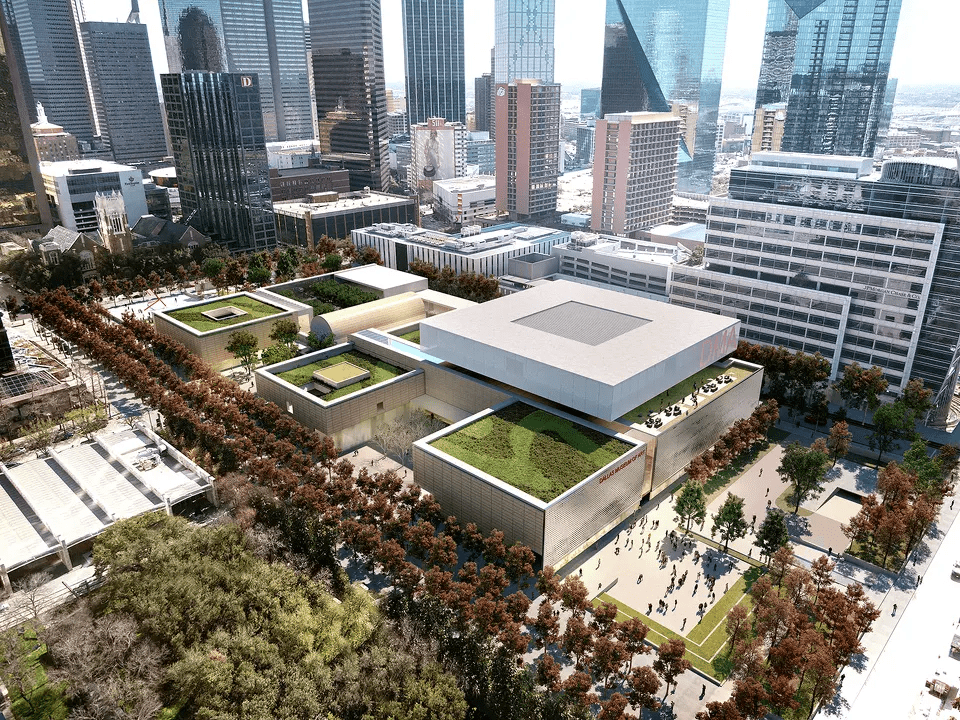
- Residential Conversion. A unique feature of Dallas is the conversion of outdated office towers into luxury residential apartments and hotels, bringing life back to the city center even after the workday ends.
This transformation allows businesses to save significantly on rent payments while offering staff the coveted professional flexibility. The new philosophy of space is based on the idea that work is what you do, not where you go. This stimulates the development of local infrastructure, as small businesses downtown adapt to the needs of mobile professionals, creating a new ecosystem of urban comfort.
It is worth noting that Dallas is currently a U.S. leader in the rate of converting office space into multifunctional facilities. This makes the city center not just a business district, but a living, 24-hour organism, ensuring the city’s high competitiveness in the struggle for the intellectual capital of the future.
Hybrid Strategy of Financial Leaders
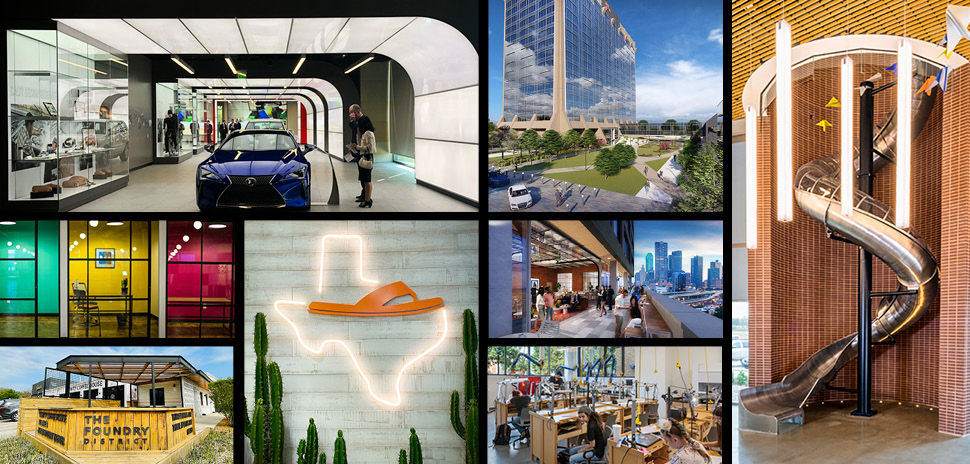
Dallas is rightfully called the “Wall Street of the South,” and the region’s powerful banking sector has become a litmus test for the massive shifts in U.S. corporate culture. Leading institutions, including Comerica Bank and JPMorgan Chase, have successfully implemented operational models that masterfully combine remote efficiency with the value of in-person communication. Today, most financial sector specialists visit offices on a flexible “3+2” or “2+3” schedule, which has not only optimized internal processes but also significantly reduced the load on the metropolis’s key transportation arteries.
Benefits of the Mixed Format for the Metropolis
- Environmental Sustainability. A substantial reduction in carbon emissions due to decreased daily traffic intensity on the congested I-35 and US-75 highways.
- Economic Decentralization. A noticeable increase in revenue for local coffee shops, restaurants, and services in “bedroom” communities and satellite cities like Plano or Frisco. Money previously spent exclusively downtown is now fueling local community development.
- Social Capital. An increase in time parents spend with their families, thanks to saving 10 to 15 hours per week previously wasted on exhausting commutes.
- Labor Market Expansion. The ability to seamlessly attract talent from distant North Texas counties (such as Denton or Fort Worth) without the need for physical relocation, making companies more competitive.
These strategic moves have helped maintain the region’s unemployment rate at historic lows, as job offerings have become much more inclusive. This creates a unique precedent where access to prestigious jobs is no longer limited to residents of central neighborhoods.
Corporate culture is not degrading; rather, it is transforming, acquiring new digital forms of control and support. Dallas proves that financial success in the 21st century is measured not by hours spent at a desk but by a business’s ability to adapt to human needs.
Technological Breakthrough in the Silicon Prairie
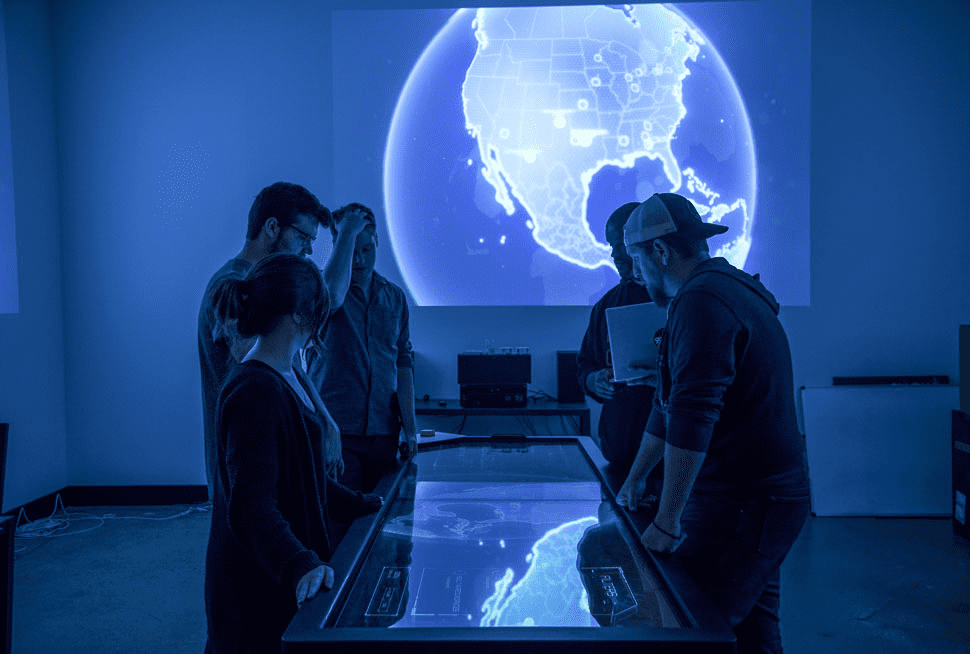
The Richardson’s Telecom Corridor, known as the Silicon Prairie, has always been a step ahead of global trends, but the mass transition to remote work became a true innovation catalyst. Technological giants like AT&T and Ericsson are actively using their own 5G developments to create completely seamless virtual offices. For Dallas’s leading engineers, their homes have turned into high-tech laboratories, where data speeds and connection stability rival powerful server stations.
5G as the Foundation of a Seamless Workspace
The implementation of fifth-generation networks has allowed the line between physical office presence and remote work to be erased. Thanks to low latency and massive bandwidth, specialists in Dallas can now manipulate complex cloud architectures and run simulations in real-time. This has created the conditions for true digital mobility, where the workplace is defined by signal quality, not an office address.
Infrastructure Changes in the IT Sector
The hybrid model requires a fundamental restructuring of business process architecture. The Silicon Prairie quickly pivoted to new market demands:
- Mass Cloud Adoption. Transitioning to Zero Trust solutions to ensure secure access to confidential databases and intellectual property from anywhere in the world.
- Urban Adaptation. Setting up integrated coworking spaces directly within new residential complexes.
- Asynchronous Management. A full transition to result-based management methods, rather than time spent online. This allows for the recruitment of the best experts from any continent.
- Remote Industrial Monitoring. The region’s industrial sector implemented IoT sensors for remote control of production lines, allowing engineers to monitor plants directly from a tablet screen.
The Battle for Intellectual Resources
This unprecedented mobility has allowed the Texas Silicon Prairie to compete on equal footing with California for the most valuable asset: human intelligence. Many specialists choose Dallas and its suburbs for the unique combination of high salaries, the absence of state income tax, and the ability to work from their backyard without losing productivity.
Today’s Dallas is a vast, decentralized network of innovators. The freedom of movement and the comfort of one’s own home have become powerful incentives for creativity, turning North Texas into a primary magnet for talent in the post-pandemic era.
Comparative Table of Employment Formats
| Analysis Metric | Classic Office | Full Remote | Hybrid Model (Dallas) |
| Logistics Costs | Maximum (gas, time) | Zero | Optimal (2-3 times/week) |
| Productivity | High under supervision | Subjective (distraction risk) | Stably high (balance) |
| Space Leasing | Requires high expenditure | Full abandonment | Flexible hubs / Hot-desking |
| Team Spirit | Direct contact | Virtual (more difficult) | Regular “live” sessions |
| Local Business | Concentrated downtown | Dispersed in suburbs | Harmonious profit distribution |
Psychology and Economics: The New Face of the Dallas Community
A candid look at the situation in Dallas requires acknowledging that remote work brought not only benefits but also serious challenges. Social isolation has become a critical topic for HR departments, as the prolonged absence of live contact can trigger burnout. To prevent this, organizations are initiating regular informal meetups to strengthen corporate bonds.
In this context, the hybrid model acts as the “middle ground,” allowing for a sense of community belonging. Residents have begun to value local parks and recreational zones significantly more, stimulating the municipality to invest actively in public spaces.
The shift in the work paradigm has also forced Dallas authorities to quickly revise tax strategies. While lower office occupancy reduces direct revenue from commercial real estate, the booming activity in suburban counties is gradually compensating for these losses. Retail and service industries are migrating to where the consumer physically stays during the day, promoting the balanced development of the entire Dallas–Fort Worth metroplex.