

Aziz Sancar is a Turkish molecular scientist who has researched the processes of DNA repair after exposure to ultraviolet (UV) rays. He was given the Nobel Prize in Chemistry for his study, which is the highest honor for any scientist. Aziz Sancar is the second scientist of Turkish origin to earn the Nobel Prize. Find out more at dallas1.one.
Desired to be a chemist but ended up becoming a doctor
Aziz Sancar was born on September 8, 1946, in the southern Turkish town of Savur. He grew up in the family of a farmer and a housewife. The parents had no formal education, but they worked hard to ensure that Aziz and the other children received one. He attended primary school in Savur and senior school in Mardin. During his time at school, he had great achievements. His favorite subjects were math, Turkish, French and, in particular, chemistry, which he wished to study more thoroughly. As a result, after finishing high school, the young man passed the entrance exam to study at Istanbul University’s Faculty of Chemistry. In addition, because five of his friends were aiming to become medical professionals, he decided to try to enroll in medical school too. He passed the two exams, but his companions persuaded him to choose a career in medicine.
Aziz Sancar initially learned about the DNA double helix in his second year of medical school, and he has since chosen to spend more time researching biochemistry. Toward the end of his studies, he spoke with Mutahar Jenson, the chairman of the Department of Biochemistry, about future post-graduate work in the department. But he was denied, citing the need that he work in the field of medicine for at least two years before engaging in research activity. As a result, Aziz returned back to Savur to practice medicine.
Moving to the United States
In 1971, Aziz earned a NATO scholarship to study in one of the member countries. He picked the United States, where he was accepted to graduate school at Johns Hopkins University’s Department of Biochemistry. However, due to a lack of English communication skills, the young scientist was forced to return home the next year.
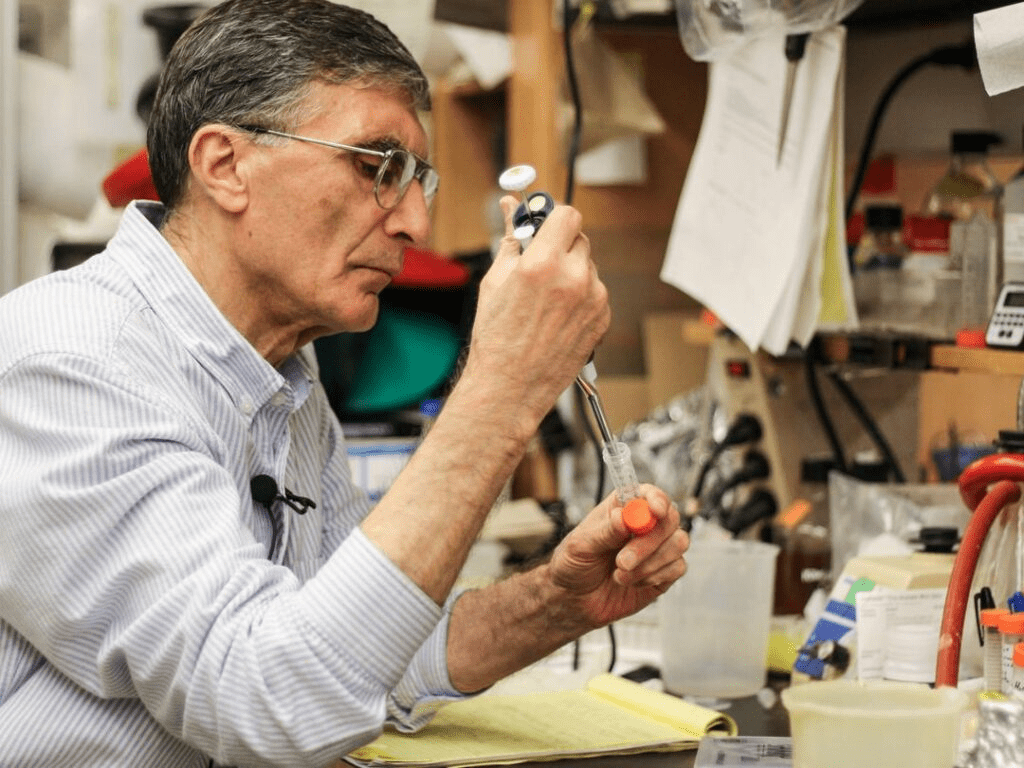
He decided to try again six months later and applied to the University of Texas in Dallas, where he joined Dr. Rupert’s lab. In 1977, Aziz received his Ph.D. in molecular and cellular biology for his work on the photoreactivation of the bacterial enzyme E. coli. He was able to replicate the gene for photolyase, an enzyme that repairs molecular damage in DNA caused by UV light exposure.
The discovery that won the Nobel Prize
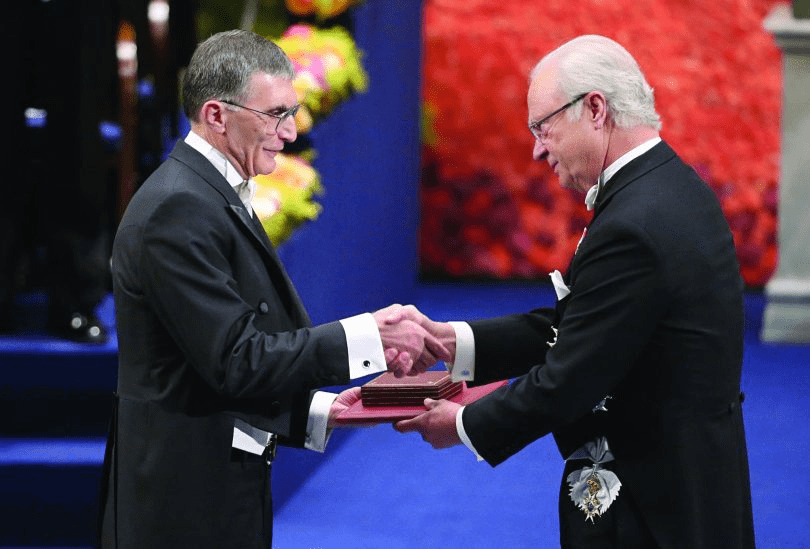
In 2015, Aziz Sancar and his colleagues Thomas Lindahl and Paul Modrich were awarded the Nobel Prize in Chemistry for their work on the mechanisms of repairing damaged DNA at the molecular level. The DNA molecule is inherently unstable. Every day, hundreds of spontaneous mutations occur in the genome of each cell, particularly during the copying of DNA for cell reproduction. External unfavorable elements, such as UV radiation, cigarette smoke, industrial emissions and so on, also play an essential part in the emergence of damages.
Dr. Lindahl researched the normal DNA repair process in cells. Dr. Modrich received the prize for discovering how damage in DNA replication arises during cell division. Dr. Sancar was honored for his work in repairing damaged DNA caused by UV exposure. If a person has any weaknesses in their healing system, they are in danger of acquiring skin cancer from sun exposure.
The fresh knowledge revealed by these three scientists will aid in the development of novel treatments for cancer as well as diseases related to aging.